
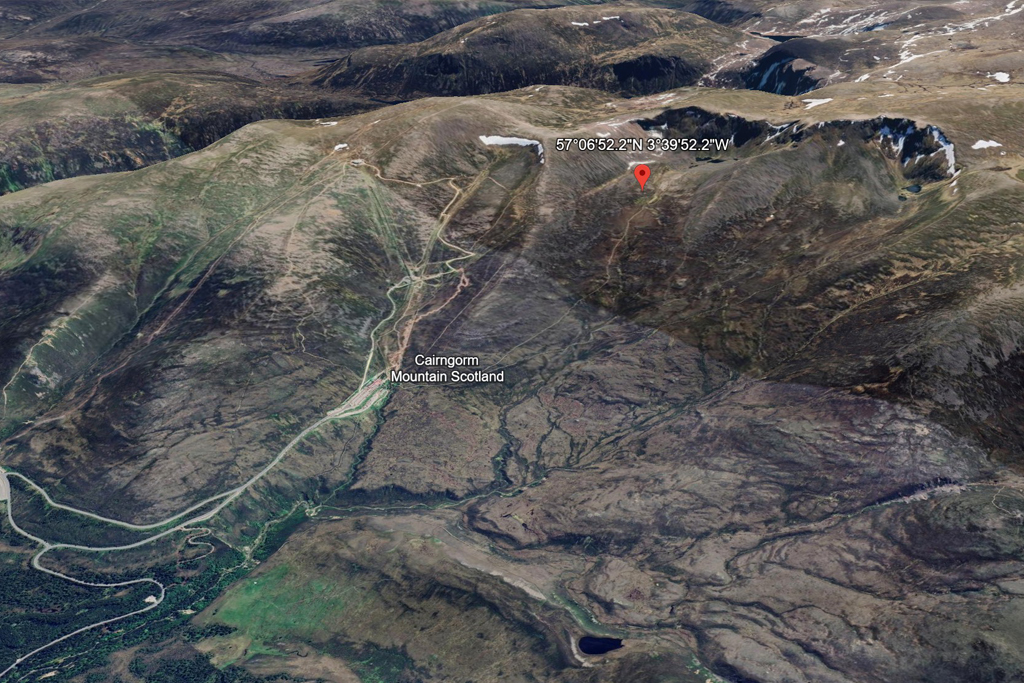
Oliver’s location when the incident occurred
Injured climber uses FastFind 220 PLB to initiate rescue from the Scottish Highlands.
Injured climber
Oliver Craven-Jones was climbing in Cairngorms, Scotland, when he fell and broke his ankle. Horrendous weather conditions meant his mobile phone would not work and so Oliver activated his FastFind 220 Personal Location Beacon (PLB) to summons emergency assistance.
In January 2026, Oliver Craven-Jones travelled to Scotland, planning to undertake 10 days of winter climbing, in Cairngorms.
On his second day of climbing, a nightmare scenario unfolded. The weather was awful, -5 degrees, very heavy snow and extreme winds, Oliver made the decision to head back, he tucked behind a rock to put away his ice axe. It was like an ice sheet, he sat down and started sliding down, his crampon got caught, breaking his ankle.
In pain and aware he was unable to go anywhere without help, Oliver Craven Jones explained “I tried calling 999, but I couldn’t hear anything, the blizzard was clogging up my phone speaker.”
With no other way of calling for help, Oliver grabbed his PLB and set it off.
The Maritime and Coastguard agency has since confirmed Oliver’s beacon was first detected at 11:57 UTC on 26th January 2026. In this first detection, data from the 220 PLB included an encoded GNSS position of 57°06’52.2″N 3°39’52.2″W
The main image (above) shows the remoteness of Oliver’s location when he activated his PLB.
Oliver says: “My fingers were frozen trying to use my phone, but with gloves on it was easy to use the PLB. The Coastguard tried to call me, but I couldn’t answer it. I’ve since discovered they called my mum at home, to see what was going on, and she confirmed I was climbing.”
Mountain rescue called Oliver and managed to get through, they confirmed they had his location and were on their way to his beacon position.
Cairngorm Mountain Rescue Team skied to Oliver and with the use of a stretcher, took him down to a waiting ambulance.
Oliver had broken his ankle in multiple places, it was re-aligned and he was sent home to rest. The next day Oliver discovered the mountain rescue team had posted a video of the rescue on Facebook.
Explore the world with peace of mind, safe in the knowledge that activating your FastFind 220 Personal Locator Beacon (PLB) will summon emergency assistance anywhere on the face of the earth.

Oliver Craven-Jones being stretchered to safety.
Image courtesy of the Cairngorm Mountain Rescue Team.
* * *
How FastFind PLBs work
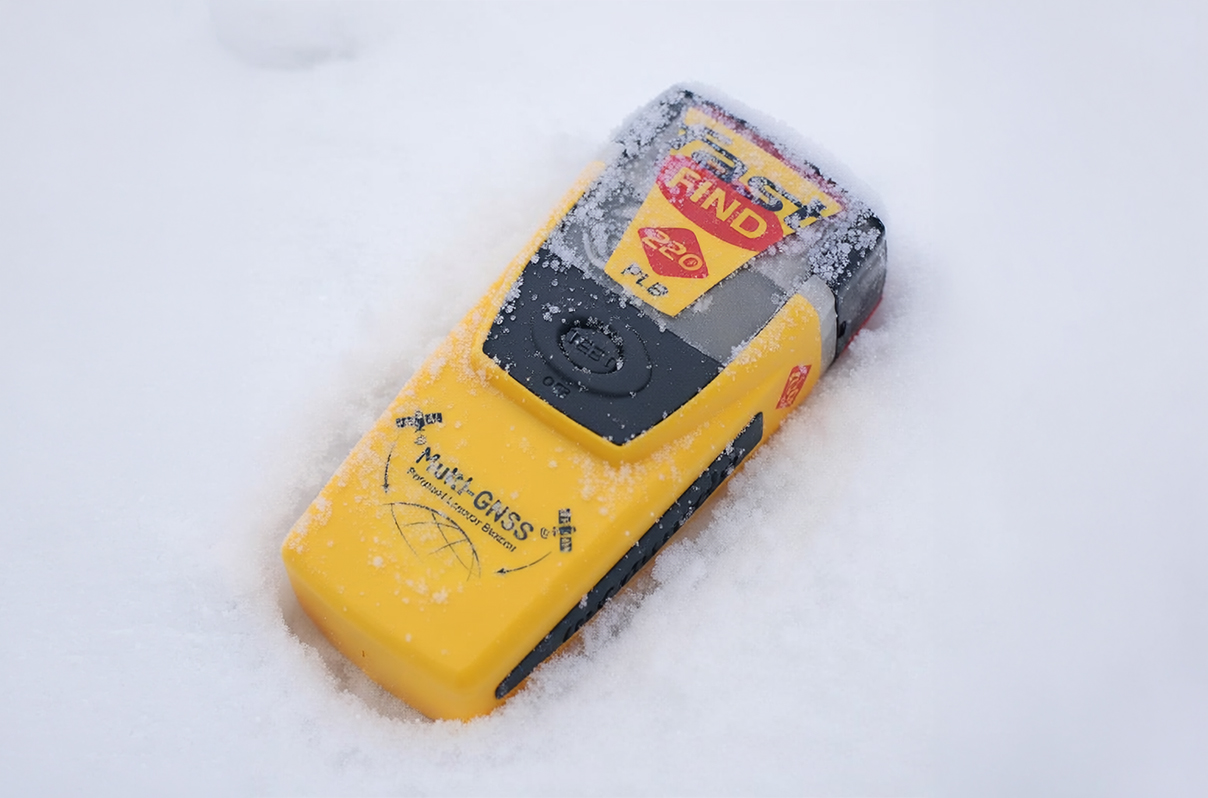
The FastFind 220 PLB works by transmitting an emergency signal via the dedicated 406 MHz distress frequency, this frequency is monitored by the global network of COSPAS-SARSAT search and rescue satellites.
When activated, FastFind 220 PLB alerts international search and rescue services to the emergency situation and provides the unique ID of the PLB user. This is typically within minutes, depending on satellite coverage at the time and a clear view of the sky. FastFind 220’s integral GNSS receivers (both GPS and Galileo) provide accurate location coordinates and regular position updates.
The Mission Control Centre relays the alert and location information to a Rescue Coordination Centre (RCC), allowing the RCC to swiftly coordinate appropriate local emergency response Search and Rescue (SAR) services.
How the Cospas-Sarsat Search and Rescue satellite system works
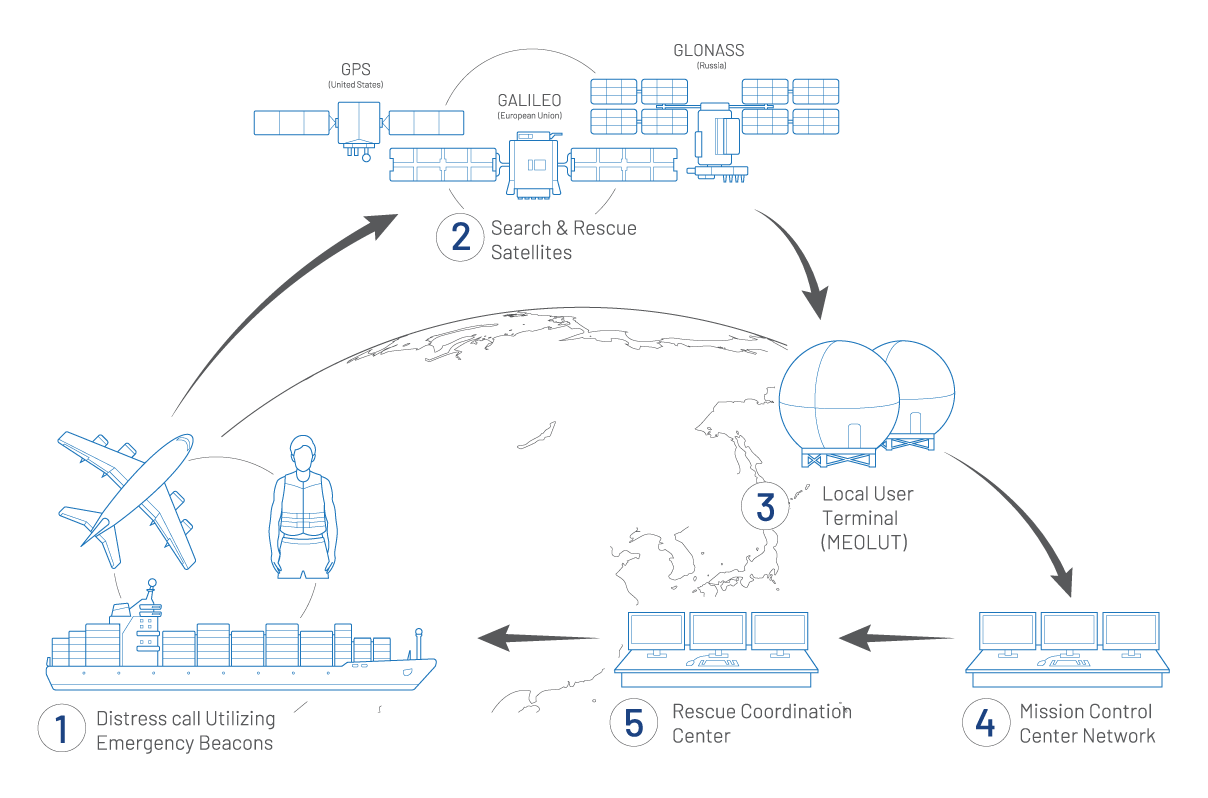
- A beacon distress signal is sent from aircraft, marine vessel or individual
- Beacon positioning/location data is relayed by satellite communications to satellite ground stations or Local User Terminals (LUTs)
- The Local User Terminal computes the location before sending alerts to the appropriate Mission Control Centers (MCC)
- The Mission Control Center collects, stores and sorts the data received from LUTs and other MCCs and distributes alerts to associated Rescue Coordination Centers (RCC)
- The Rescue Coordination Center notifies and coordinates emergency response/rescue teams